
Learning how to balance pool water can feel confusing at first, especially if you are new to pool maintenance. Many beginners think it requires complicated steps, but once you understand the basics, the process becomes simple and manageable. The goal is to keep your pool clean, safe, and comfortable for everyday use.
When you properly balance pool water, you reduce the chances of irritation, algae growth, and dull-looking water. This guide will help you understand the process step by step so you can manage your pool with confidence.
Understanding Pool Water Balance
To properly balance pool water, you need to manage a few key elements that work together. Balanced water means that pH, chlorine, alkalinity, and calcium levels are all within the correct range. When these levels are stable, your pool stays clear and easy to maintain.
Instead of adding products randomly, focus on proper pool chemical balancing. This ensures that each adjustment supports overall water quality rather than creating new issues. Small changes, when done correctly, can make a noticeable difference in keeping your pool stable.
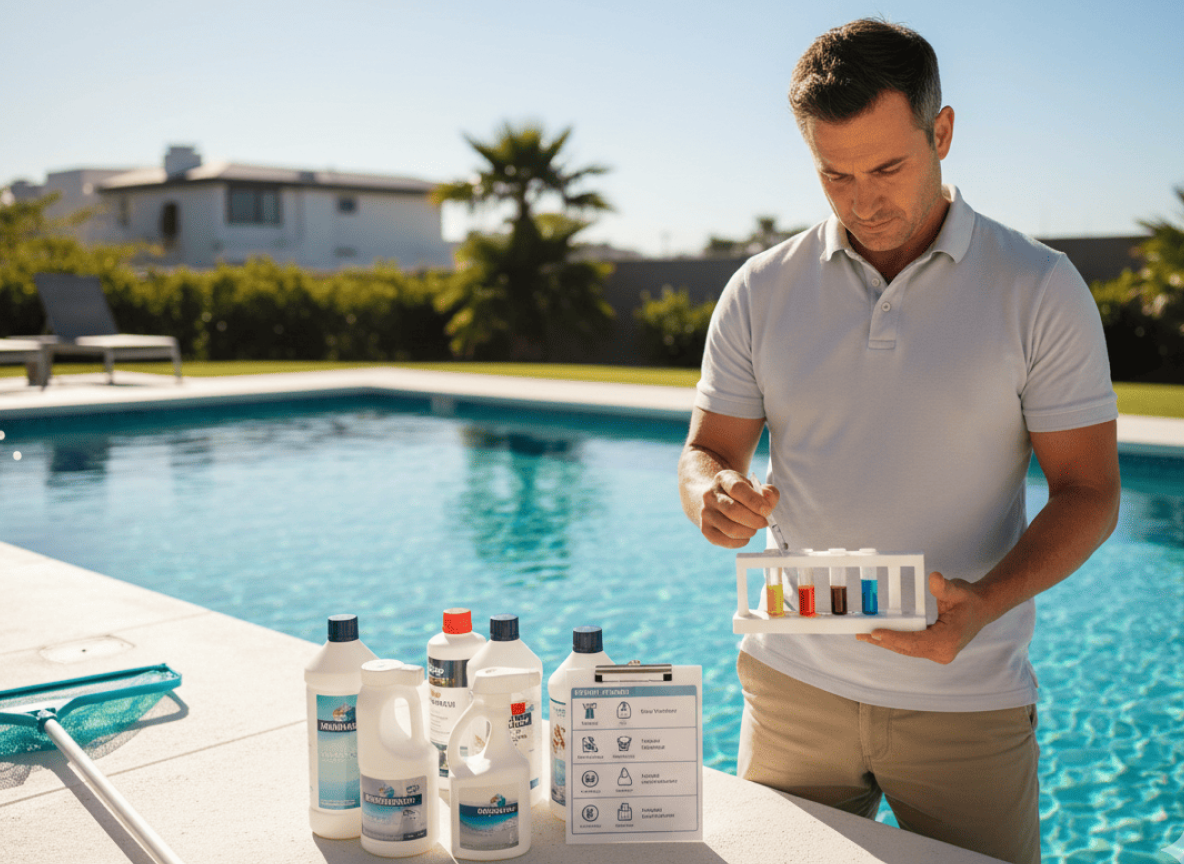
Regular monitoring through pool water testing helps you understand your water condition and decide what adjustments are needed.
Key Levels You Need to Control
To properly balance pool water, it is important to understand the key levels that affect water quality. Each of these elements works together, and even a small imbalance can change how your pool looks and feels. When you keep these levels in check, your pool stays clear, safe, and comfortable for swimming. Learning how they interact will make pool maintenance much easier over time.
pH Level
The pH level tells you how acidic or basic your pool water is. It directly affects comfort and clarity, which is why it is one of the first things you should monitor. If pH is too high, the water may feel rough on the skin and can lead to scaling on surfaces. If it is too low, it can cause irritation and slowly damage pool equipment.
Maintaining proper pH is an important step when you balance pool water and ensure better overall water quality. Keeping it within the ideal range also helps other chemicals work more effectively.
Chlorine Level
Chlorine is responsible for keeping your pool clean by removing bacteria and preventing algae growth. It plays a major role in maintaining safe swimming conditions and keeping the water fresh.
If chlorine levels drop too low, the water can quickly become unsafe. On the other hand, too much chlorine can cause strong smells and discomfort. Keeping chlorine within the right range supports effective pool chemical balancing and helps maintain clear and hygienic water.
Total Alkalinity
Total alkalinity acts as a stabilizer for pH levels and helps prevent sudden changes. Without proper alkalinity, pH can fluctuate quickly, making your pool difficult to manage.
Adjusting alkalinity early in the process supports the steps to balance pool water and helps maintain consistent water conditions. When alkalinity is balanced, it creates a more stable environment for all other chemical levels.
Calcium Hardness
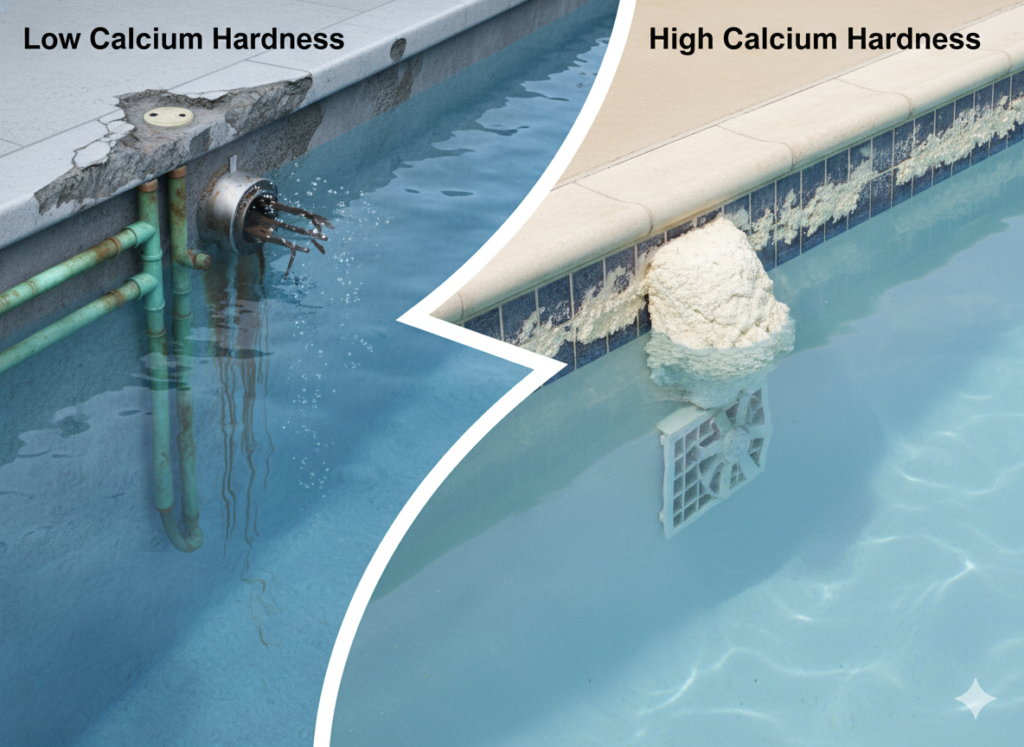
Calcium hardness protects your pool surfaces and equipment from damage. Low levels can make the water corrosive, which may harm pool walls and pipes. High levels, however, can lead to scaling and visible deposits.
Maintaining proper calcium levels is important for long-term maintenance of pool water quality and preventing damage. Balanced calcium levels also help keep your pool looking clean and well-maintained over time.
Step-by-Step Process to Balance Pool Water
- Start by testing your water to understand which levels need adjustment
- Adjust alkalinity first to help stabilize pH levels
- Balance the pH to bring it within the ideal range
- Add or adjust chlorine to maintain clean and safe water
- Check calcium hardness and make necessary corrections
- Monitor external factors like pool water features, as they can affect water balance
How to Keep Your Pool Water Balanced?
Once you balance the pool water, maintaining it becomes much easier with a simple routine. Regular cleaning, removing debris, and checking chemical levels help keep the water stable and prevent sudden changes.
Weather conditions and heavy pool usage can affect your water balance, so it is important to stay consistent with your routine. Small and timely adjustments help you avoid bigger issues and keep your pool in good condition.
If your pool starts to lose clarity, proper water treatment can help restore a clean and clear appearance while keeping the water safe and comfortable for swimming.
Maintaining Long-Term Water Quality
Long-term water balance requires consistency and regular attention. Following a simple routine makes maintaining pool water quality easier and more predictable, helping prevent sudden changes in water condition.
Regular checks, along with proper pool chemical balancing, help keep the water safe and comfortable for swimming. Monitoring changes regularly allows you to make small adjustments on time and avoid bigger issues.
If your pool begins to look dull or cloudy over time, using the right cloudy pool water treatment can help restore clarity and keep the water clean, balanced, and visually appealing.
Conclusion
Balancing pool water is not about following strict rules. It is more about understanding your pool and how it reacts over time. Things like weather, how often the pool is used, and even small changes in the environment can affect the water. That is why paying attention and making small adjustments works better than making big changes all at once.
With time, you naturally get used to how your pool behaves. A simple and consistent routine helps you stay in control without feeling overwhelmed. Once you understand the basics, keeping your pool clean, safe, and balanced becomes much easier and more manageable.