A small amount of water loss is normal in most swimming pools. Hot weather, sunlight, wind, and regular swimming activity can slowly lower the water level over time. But if your pool is losing water faster than usual, there may be a bigger issue behind it.
In some cases, the cause of the water loss could be evaporation, whereas in others, it could indicate that there is a leak in the pool. Such a case should not be ignored since you will incur high bills in the long run.
In this blog, we will discuss common pool water loss causes, signs to watch for, and simple ways to fix the problem before it gets worse.
How Much Pool Water Loss Is Normal?
Most pools naturally lose a little water every day. During summer, heat and wind can increase evaporation, especially if the pool stays uncovered for long hours.
In many cases, losing around a quarter inch of water daily is considered normal. Pools in warmer climates may lose slightly more because of direct sunlight and high temperatures.
But if your pool level is dropping much faster than normal, it may be time to check for leaks or equipment issues.
Common Causes of Pool Water Loss
There are several reasons why pools lose water. Some problems are harmless, while others may need repairs before they become more serious.
Evaporation During Hot Weather
Evaporation is one of the most common causes of pool water loss. Hot temperatures, direct sunlight, and windy weather can all increase water loss during the day. Pools without covers usually lose more water because the surface stays exposed for long periods.
And during heat waves, homeowners may notice their pool losing water more quickly than usual. Using a pool cover can help reduce evaporation and lower unnecessary water loss throughout the summer.
Pool Leaks
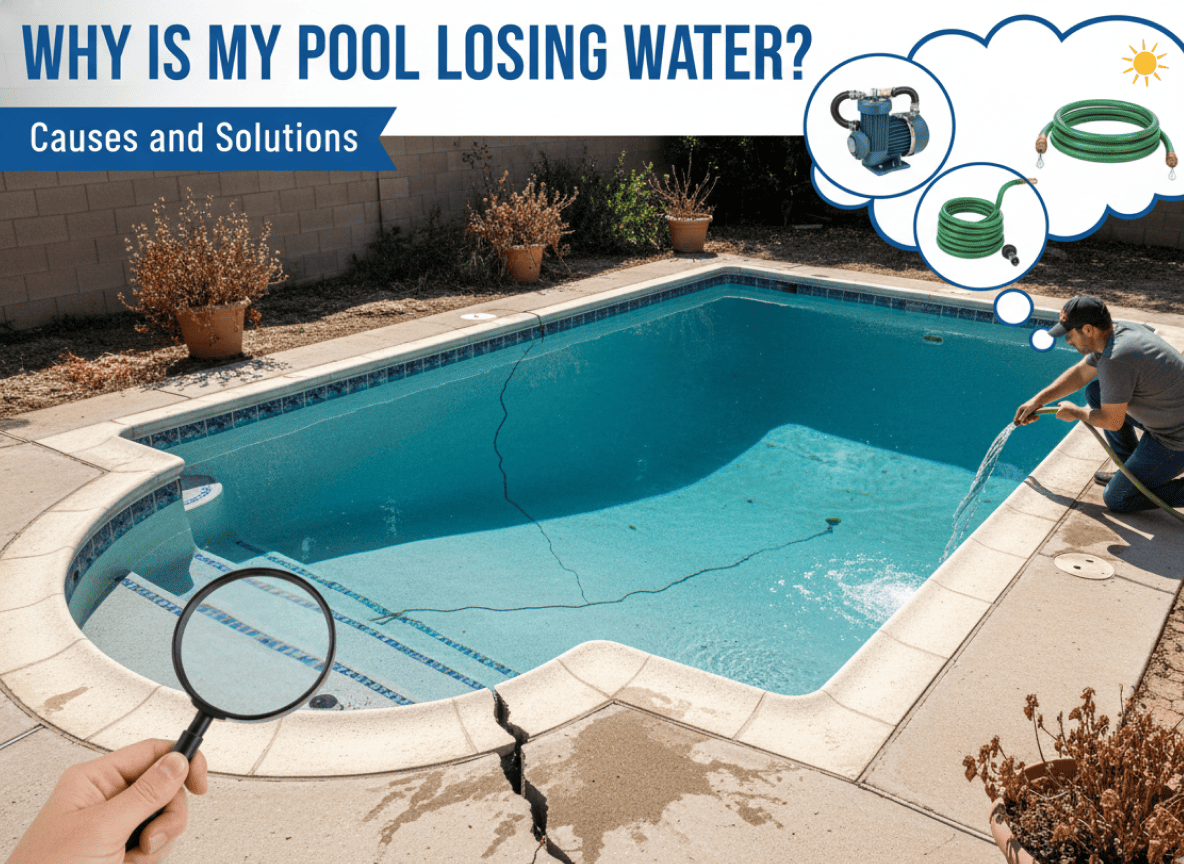
One of the major causes of water wastage is a hidden leak. A pool that is leaking through the ground or a broken surface can consume a lot of water without anyone noticing it. Although the leak may seem small, it can result in costly repairs in the future.
Damaged pool walls, cracked liners, loose fittings, and broken pipes are some of the possible causes of a leak. If you notice that your pool keeps losing water even if there is no one using it, you should check for leaks.
Problems With Pool Equipment
Another source of water loss is a leaking pool pump, filter, heater, or plumbing lines. Over time, the pool equipment will start leaking if it is old and has been used for many years.
Checking your pool cleaning equipment regularly can help you catch these problems early. Regular inspections also help prevent larger repairs and keep the pool system running more efficiently throughout the year.
Splashing and Intense Pool Usage
Water loss does not only result from damage or leaks in the pool equipment. Splashing, diving, playing games, and swimming are natural causes of water loss in pools. Families with children will usually notice more water near their pools during the summer due to intense usage.
Pool parties can also cause extra splash-out and overflow. This type of water loss is completely normal. But if your pool level is dropping quickly, even without heavy use, another issue may be causing the problem.
Backwashing and Filter Cleaning
Cleaning the pool filter also involves removing water from the pool. In backwashing, water is flushed out together with debris that is caught within the filter. Too much backwashing will remove water faster than most pool owners anticipate.
Proper pool water care can help reduce unnecessary cleaning and prevent extra water loss. Keeping the filter clean without over-cleaning is usually the best approach.
How to Tell if Your Pool Has a Leak
It is not always easy to know if water loss comes from evaporation or a leak. Thankfully, there are a few simple ways to check the problem at home.
Use the Bucket Test Method
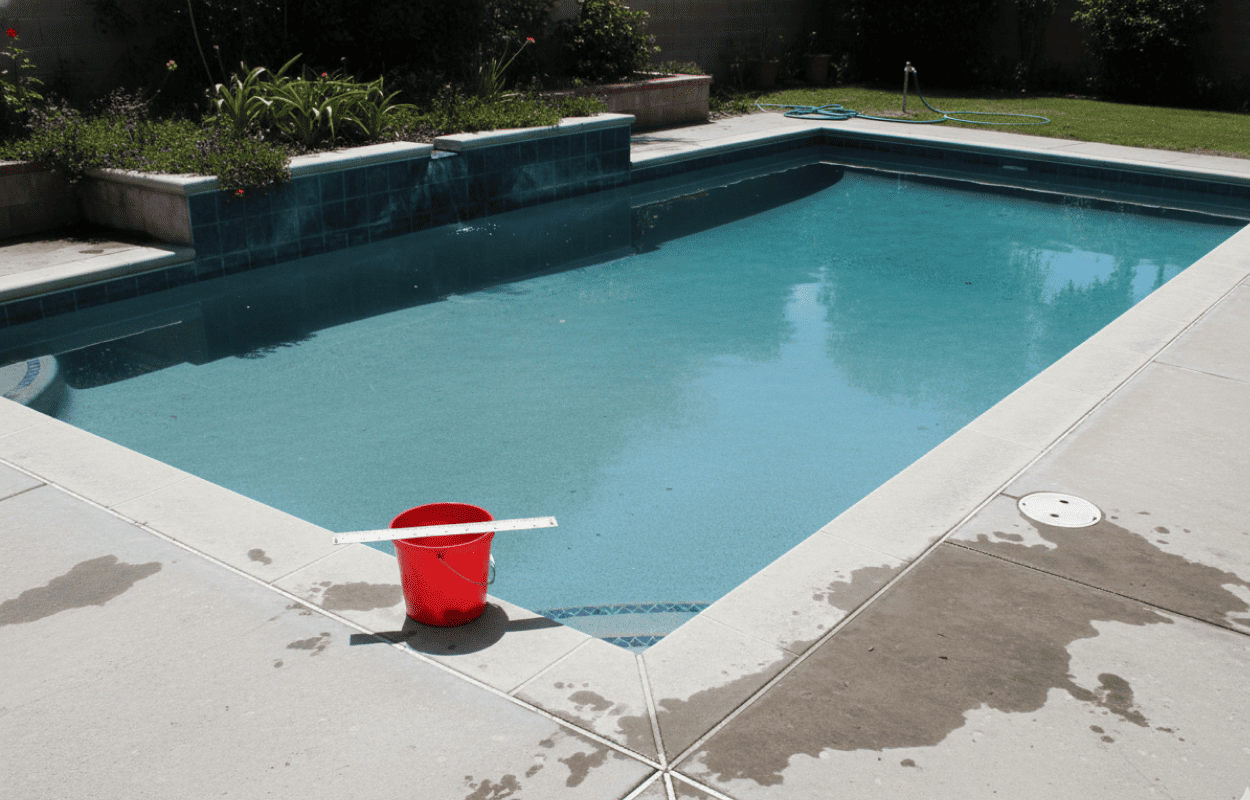
The bucket test is an easy way to determine leaks. Fill a bucket with some pool water, and place it next to the pool. Make marks on both the bucket and the pool for their water levels.
Compare both measurements after 24 hours. The pool that loses more water compared to the bucket likely has a leak somewhere in its structure.
Check Other Parts of the Pool
Wet soil, cracks in concrete, sinkholes, or loose tiles near the pool are indicators of possible leaks. At times, air bubbles in the return line or continuously wet grass around the yard are also indications of leaks.
These are important indicators to pay attention to since underground leaks are gradually causing damage in the vicinity. A small leak today could become a major problem tomorrow.
Watch the Water Level Carefully
Checking the water level every few days can help you spot problems early. If you constantly need to refill the pool, there may be more than simple evaporation happening.
A pool level dropping faster than normal usually means it is time to inspect the pool, equipment, and plumbing system more carefully.
Solutions for Pool Water Loss
After identifying the cause of the problem, it should not be difficult to find a solution. There are those that require nothing other than maintenance, while others will require professional attention. It pays off to resolve this issue quickly so that you do not incur high water bills in the process.
Use a Pool Cover
Pool covers help reduce evaporation during hot weather and windy conditions. They also keep leaves, dirt, and debris out of the water, which lowers cleaning needs and chemical use. And besides reducing water loss, a cover can also help maintain water temperature during cooler months.
Fix Pool Leaks Immediately
Even small leaks might not be a significant problem initially; however, if left untreated, they can become costly repair work. It is crucial to repair any cracks in the pool surface, damage to liners, or leaking plumbing. In case your pool is leaking underground, you may benefit from hiring professionals who specialize in leak detection services.
Inspect Equipment Regularly
Pool equipment should be checked regularly for leaks, wear, or loose connections. Pumps, filters, and plumbing lines can slowly waste water over time if they are not maintained properly. Regular inspections also help balance pool water and improve overall circulation throughout the pool system.
Do Not Overfill the Pool
There are some people who will go ahead to fill up the pool excessively in order to anticipate water loss. This might not necessarily be the best approach. The right water level is always better in terms of efficiency of the water filtration process.
When to Call a Pool Professional
While there are some solutions that you can manage on your own, others will require professional expertise. Signs that indicate when professional assistance is required include fast depletion, damaged areas, wet spots within the vicinity of the pool, and plumbing complications.
Leak detection gadgets can help professionals pinpoint issues that would otherwise remain hidden. You will definitely need professional attention when there are several weeks of water loss with no apparent cause.
Tips to Prevent Future Water Loss
Preventing water loss is often easier than fixing major damage later. Simple habits like using a pool cover, inspecting equipment regularly, and repairing small cracks early can help reduce future problems.
Regular maintenance also helps improve water quality and keeps the entire pool system running more efficiently throughout the year.
Conclusion
A small amount of water loss is normal, especially during hot and windy weather. But if your pool is losing water faster than usual, it is important to find the cause early before the problem becomes more expensive.
Evaporation, damaged equipment, and hidden leaks are some of the most common causes of pool water loss. Regular inspections, proper maintenance, and quick repairs can help keep your pool in good condition for years.
And if you suspect a serious pool leaking issue, contacting a professional early can save both time and money in the long run.
FAQs
-
How much water loss is normal in a pool?
Most pools lose a small amount of water daily because of evaporation, especially during hot weather and windy conditions.
-
How can I tell if my pool has a leak?
The bucket test is one of the easiest ways to check. Wet spots around the pool and constant refilling may also point to leaks.
-
Can evaporation cause major water loss?
Yes. Hot temperatures, direct sunlight, and strong winds can increase evaporation during the summer months.
-
Does a pool cover help reduce water loss?
Yes. Pool covers help reduce evaporation and also keep debris out of the water.
-
When should I call a pool professional?
You should contact a professional if the pool keeps losing water quickly or if you notice cracks, wet soil, or plumbing problems around the pool.