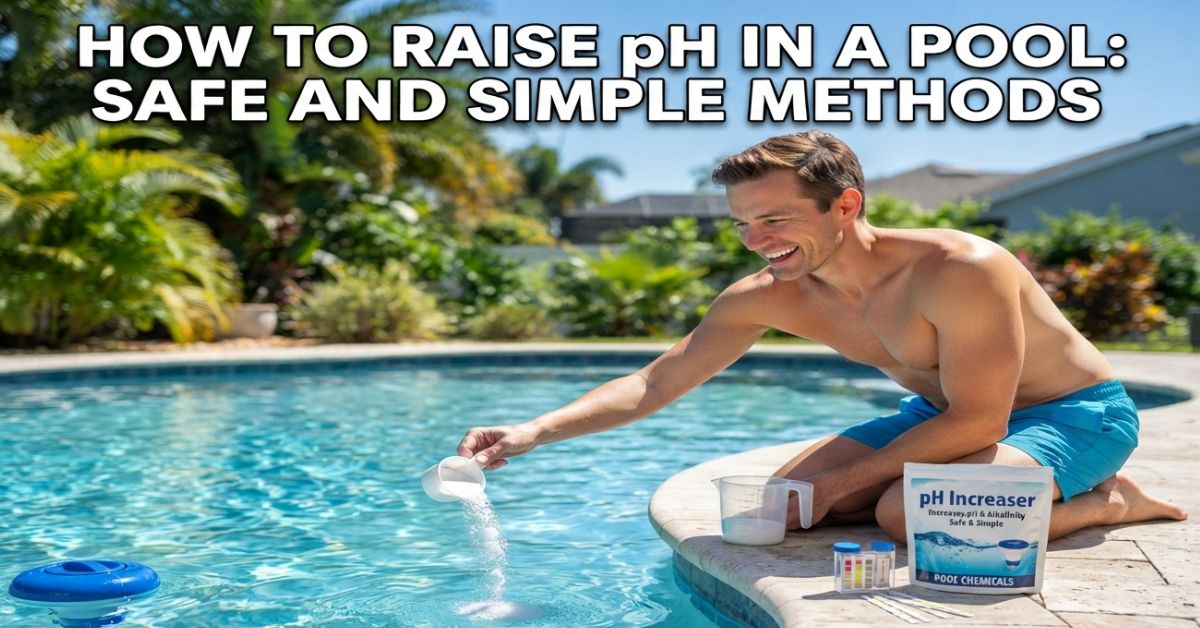
A swimming pool should feel comfortable every time you step into the water. If the pH becomes too low, you may notice eye irritation, damaged equipment, or water that simply does not feel right. The good news is that low pH is usually easy to correct with the right approach.
If you need to raise pool pH, the most important thing is to make gradual adjustments instead of adding large amounts of chemicals at once. This guide explains how to identify the problem, choose the right product, and safely restore the ideal pool pH without creating another imbalance.
Why Is Your Pool pH Too Low?
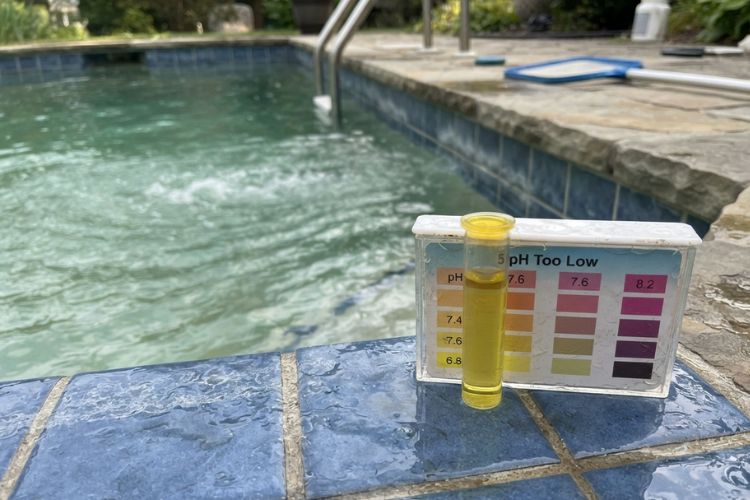
Before adding anything to the water, it helps to understand why the pH dropped. Fixing the cause often prevents the same issue from returning a few days later.
Heavy rainfall is one of the most common reasons a pool pH level falls below the recommended range. Fresh water dilutes the minerals already in the pool and changes the water balance. Frequent swimming, acidic products, and low total alkalinity can also contribute.
This is why testing both pH and alkalinity is important before making adjustments. A complete water test makes it easier to balance pool water instead of correcting only one reading while another problem remains.
What Should You Use to Raise Pool pH?
Not every pool product is designed to increase pH. Choosing the right one makes the process faster and reduces the chance of overcorrecting the water.
pH Increaser
A commercial pH increaser is the best option for most pools. It is formulated specifically to raise pool pH and provides more predictable results than household alternatives. Always read the instructions and measure the recommended amount based on your pool size.
Can Baking Soda Help?
Many homeowners search for how to get the pH up in pool water using products they already have at home. Baking soda can increase pH slightly, but it mainly raises total alkalinity.
If your alkalinity is already within the recommended range, a dedicated pH increaser is usually the better choice. Using the correct pool chemicals helps you make accurate adjustments instead of creating additional water balance issues.
How To Raise pH In A Pool Safely
Once you know which product to use, the next step is applying it correctly. Small adjustments usually produce better results than trying to fix everything in one treatment.
Test The Water First
Use a reliable testing kit to check both the pH and alkalinity before adding anything. This confirms that you really need to raise the pool pH and helps you determine how much product will be required.
Add The Recommended Amount
Always read the instructions on the label and use the right quantity for your pool. Putting too much of the chemical will not help solve the issue any quicker. It might also cause the pool water to exceed the ideal pH of the pool.
Keep The Water Moving
Turn on the pool pump before adding the pH increaser and leave it running afterward. Good circulation distributes the product evenly throughout the water and prevents concentrated areas from forming.
Test The Water Again
Allow the water to circulate for the time recommended on the product label before testing again. Checking too soon may give inaccurate readings because the product has not fully mixed with the water.
Repeat Only If Needed
If the pH is still below the recommended range, make another small adjustment instead of adding a large amount all at once. Taking a gradual approach is the safest way to raise pool pH while keeping the rest of the water chemistry stable.
How Long Does It Take for Pool pH to Increase?
After adding a pH increaser, the water does not adjust instantly. The exact time depends on the product you use, your pool size, and how well the water is circulating. In many cases, the pH begins to change within a few hours, but you should always follow the waiting time recommended on the product label before testing again.
Do not make repeated changes immediately. If the initial application does not have time to distribute, the addition of another layer of the product will result in an increase in pH beyond what is required. Often, patience yields better results.
If you are wondering how to get the pH up in pool water as quickly as possible, the safest answer is to let each adjustment work before deciding whether another one is needed. A steady approach helps protect both the water balance and your pool equipment.
How To Keep Your Pool pH Balanced
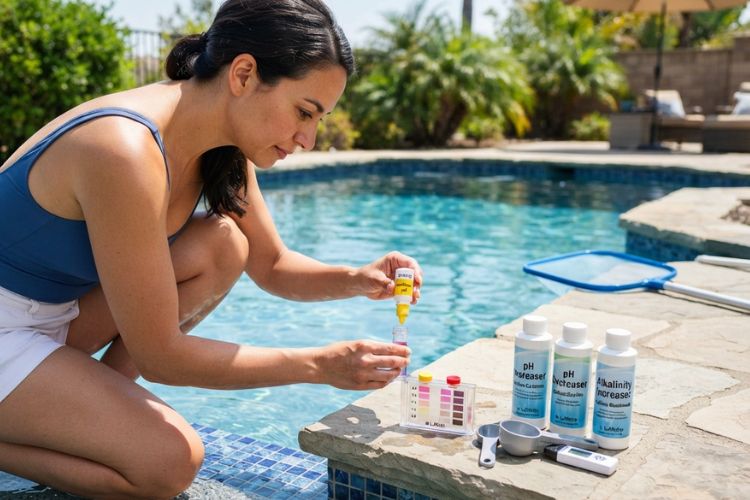
Once you have corrected the problem, keeping the water stable becomes much easier than fixing it again. Regular testing allows you to spot small changes before they turn into larger issues.
Pool PH should be checked either once or twice every week, depending on whether there has been heavy rainfall, pool parties, or replenishment of water in the pool. It may be easier for pool owners to keep the pool PH balanced than expected.
It is also worth paying attention if you notice the pool level dropping over time. While evaporation is normal, a larger-than-expected drop may indicate another issue that can affect water chemistry and require more frequent adjustments. Addressing the cause early helps keep the water balanced with less effort.
Final Thoughts
Keeping your pool in good condition does not require complicated maintenance. Once you understand how to test the water and make small adjustments, it becomes much easier to raise pool pH without creating new water balance problems.
Instead of trying to fix everything at once, focus on gradual corrections and regular testing. Reaching the ideal pool pH helps protect your equipment, improves swimmer comfort, and makes routine pool care much more manageable throughout the season.
FAQs
What is the quickest method to increase the pH level in a pool?
The use of a chemical pool pH increaser is generally the quickest and most effective method. It is important to adhere to the manufacturer’s directions and give the solution ample time to circulate in the pool prior to testing.
Can I use baking soda to raise pool pH?
Yes, but baking soda mainly raises total alkalinity. If alkalinity is already within the recommended range, a dedicated pH increaser is generally a better choice.
How often should I test my pool pH?
For most residential pools, testing once or twice a week is a good routine. You should also test after heavy rain, large gatherings, or adding fresh water to the pool.
What will happen if the pH in the pool is too high?
If the pH level in the pool is too high, it may decrease the effectiveness of chlorine, cause turbidity of water, and also lead to the accumulation of scale on the surface of the pool.