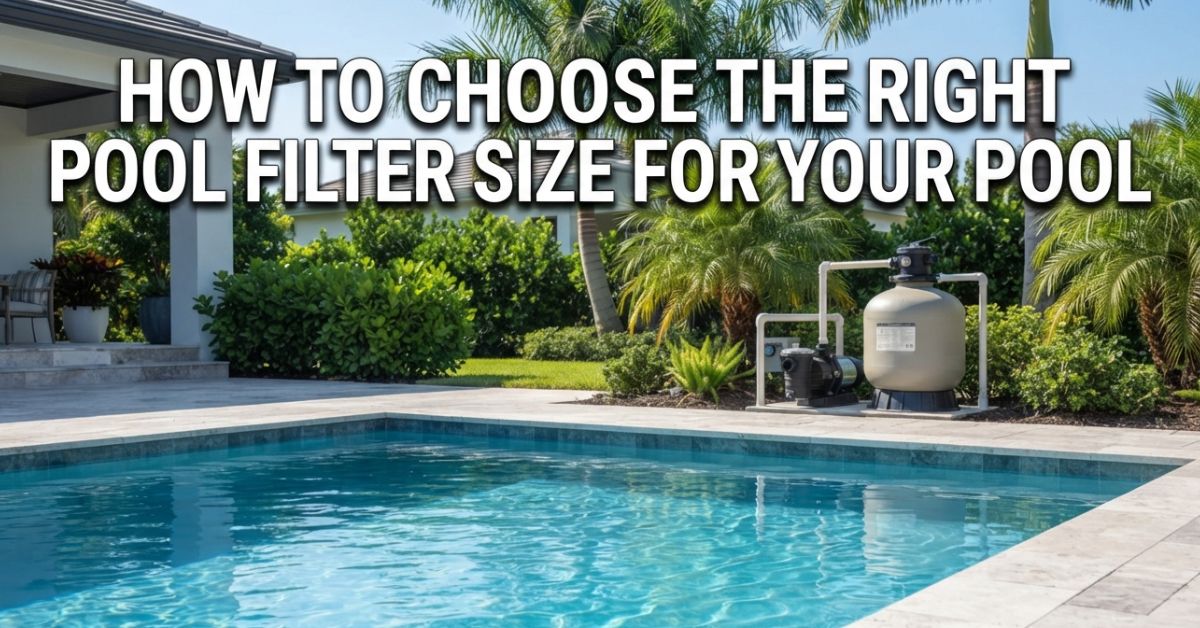
A pool filter does a lot of work behind the scenes. It removes dirt, debris, oils, and other particles from the water so the pool stays cleaner between maintenance sessions. But even a good filter may struggle if it is too small for the circulation system.
Learning how to choose pool filter size starts with more than the number of gallons in the pool. Pool volume, pump flow, turnover time, filter type, and the way the pool is used all affect the right choice. Current pool filter sizing guides also recommend looking at these factors together rather than relying on pool gallons alone.
Start With Your Pool’s Water Volume
Knowing the pool size is a useful starting point because it tells you how much water the circulation system needs to process. If you know the pool’s capacity, you can use that number to estimate the flow rate needed for a complete turnover.
The volume of a rectangular pool can be calculated through the length, width, and average depth. This does not apply to other shapes. If the pool has been professionally constructed, the water volume will be known from the start.
Still, gallons are only part of pool filter sizing. Two pools with similar capacities may need different equipment depending on their pumps, plumbing, filter type, and usage.
Understand Flow Rate and Turnover
Flow rate is usually measured in gallons per minute, or GPM. It tells you how much water the circulation system can move through the filter during a given period.
Turnover time refers to how long it takes the system to circulate a volume of water equal to the pool’s capacity. A basic calculation for estimating required flow is:
Required GPM = Pool Volume ÷ (Turnover Time × 60)
For example, a 24,000-gallon pool with an eight-hour target turnover would require about 50 GPM. This calculation provides a starting point, but actual system flow depends on plumbing, resistance, pump settings, and other equipment. Current sizing calculators also use pool volume, turnover time, and actual pump flow when evaluating filter requirements.
Match the Filter to the Pump
The filter and pump need to work together. A pump that pushes more water than the filter is designed to handle can create excessive pressure and reduce filtration performance.
This is why pool equipment sizing should be considered as a complete system rather than choosing each component separately. Check the filter’s maximum flow rating and compare it with the pump’s actual operating flow. Pump horsepower alone does not tell you exactly how much water will move through the system because plumbing and resistance affect real-world flow. When reviewing pool pumps, look at the manufacturer’s performance information and pump curve rather than relying only on the horsepower number.
Choose the Right Filter Type
Sand, cartridge, and DE filters all work differently, so their sizing methods are not identical.
-
Sand Filters
Sand filters are common because the operation process for these filters is relatively easy. If the filter becomes dirty, then backwashing is done to remove any debris that may have settled in the filter. There needs to be compatibility between the filter and the tank.
-
Cartridge Filters
Cartridge filters use a pleated element to catch dirt, dust, and other small particles as water passes through. Their capacity is usually measured in square feet, so choosing the right cartridge filter size for pool systems is important for effective filtration. A larger cartridge provides more surface area for collecting debris, but it still needs to match the recommended flow rate for the system.
-
DE Filters
Diatomaceous earth, or DE, filters are designed to capture very fine particles. They can provide excellent water clarity, but maintenance is generally more involved because the filter media needs to be replenished as part of the cleaning process.
Why a Larger Filter Can Be Useful?
Choosing a filter that is too small can mean more frequent cleaning and higher operating pressure. A larger filter provides more surface area for collecting debris, which can help it operate below its maximum capacity.
This does not mean homeowners should simply buy the biggest filter available. The filter still needs to work with the pump, plumbing, and other equipment. Proper pool equipment sizing means looking at the complete system and following the specifications provided by the manufacturers.
Current sizing resources commonly favor giving a filter some capacity beyond the minimum requirement rather than running it close to its maximum flow.
Watch for Signs of an Undersized Filter
Your pool can sometimes tell you that the filtration system is struggling. Frequent cleaning, rapidly increasing filter pressure, reduced circulation, or cloudy water may indicate a problem.
However, these symptoms do not automatically mean the filter is too small. A dirty filter, blocked plumbing, poor water chemistry, or an incorrectly adjusted pump can create similar issues.
If you regularly need to clean the filter or notice that pressure rises quickly after cleaning, check the entire circulation system before replacing equipment.
Consider How Your Pool Is Used
The right filter setup can depend on how and where your pool is used. A pool surrounded by trees may collect more leaves and debris, while one used frequently by several swimmers can have higher levels of oils, sunscreen, and other contaminants. Water features, automatic cleaners, and additional equipment can also affect the system’s flow requirements.
These factors are worth considering when deciding how to choose a pool filter size for a new installation or replacement. Regular water care matters as well. Even the right filter cannot fix poor water chemistry, so homeowners should balance their pool water according to the manufacturer’s recommendations and keep up with routine cleaning and circulation.
Check the Filter You Already Have
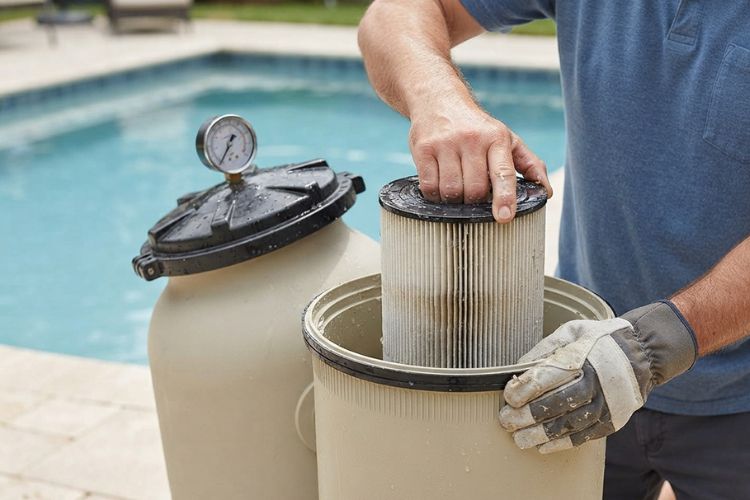
Before replacing the filter, take a few minutes to check the one already installed. You will usually find the brand, model number, flow rating, and filter area on the label. Compare this information with your pump and pool volume. If everything has been working well, sticking with the same model may be the easiest option.
But your old filter may no longer be the right fit if you’ve changed the pump, added equipment, or started using the pool more often. Problems such as cloudy water or weak circulation are also worth checking. After any major equipment change, review the pool equipment sizing to make sure the whole system still works properly.
Common Sizing Mistakes to Avoid
It is easy to look at your pool’s gallon capacity and choose a filter based on that number alone. But there is more to consider. The pump’s actual flow, the type of filter, and how the system is set up all affect whether a filter will work properly.
It is also easy to think that a smaller filter will be enough or that choosing a larger one automatically means better performance. A filter that is too small may require frequent cleaning, while an oversized option may not work well with your existing equipment. Always check the manufacturer’s recommendations before making a decision.
When to Get Professional Help
Sizing can become more complicated when replacing several pieces of equipment at once. Professional advice can be useful if you are installing a new pool, changing the pump, adding water features, dealing with unusual plumbing, or experiencing persistent cloudy water.
A professional can look at the complete system rather than treating the filter as an isolated component. This can help prevent mismatched equipment and unnecessary replacement costs.
Final Thoughts
Learning how to choose pool filter size starts with your pool volume, but it should not end there. Pump flow, turnover time, filter type, plumbing, usage, and other equipment all play a role.
The correct filter will have adequate capacity for the whole system and not just selected blindly based on its size. In cases where equipment needs to be replaced, one must factor in how the overall circulation system functions.
A properly sized filter can make routine maintenance easier and help support consistent water quality. If you are unsure about how to choose pool filter size for your particular setup, professional guidance can help you make a more informed decision.
FAQs
What filter size will I require for my pool?
It all depends on your pool volume, needed flow rate, turnover period, filter type, and the capacity of the pump.
How can I determine filter size for my pool?
Use the pool volume and needed turnover period to arrive at the GPM requirement, then compare this flow with the capacity of the filter and the operating flow of the pump.
Is a larger cartridge filter better?
A larger cartridge can provide more filtration area and may require less frequent cleaning. It still needs to be compatible with the pump and circulation system.
Can a pool filter be too small?
Yes. A filter that is too small for the system may operate at higher pressure, require more frequent cleaning, and struggle to handle the pump’s flow.
Which filter type is best for a pool?
Sand, Cartridge, and DE filters require separate maintenance and filtration processes. It is up to the user to choose one that is most suitable for his/her pool system and available resources.