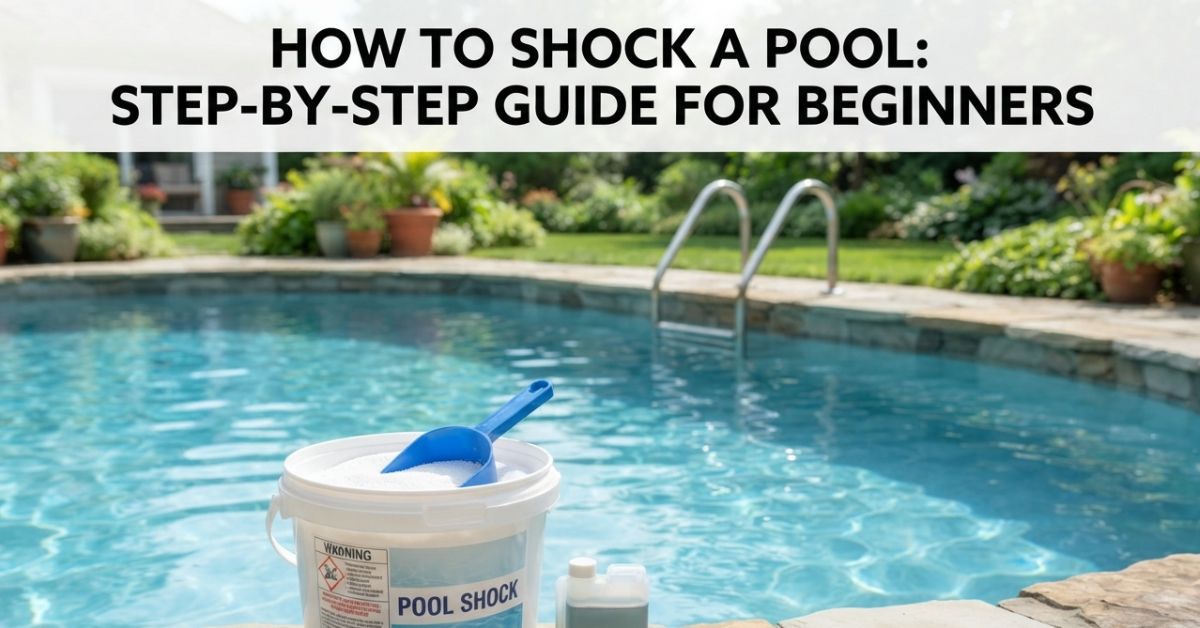
Clear pool water does not stay that way on its own. Leaves, sunscreen, sweat, rain, and heavy pool use all affect water quality over time. Regular chlorine helps with everyday sanitation, but there are times when the water needs a stronger treatment to restore proper balance.
Learning how to shock a pool is one of the most useful maintenance skills for any pool owner. The process is straightforward once you understand when it should be done and how to apply the product safely. This guide explains each step in a simple way so you can complete a pool shock treatment with confidence.
What Does It Mean To Shock A Pool?
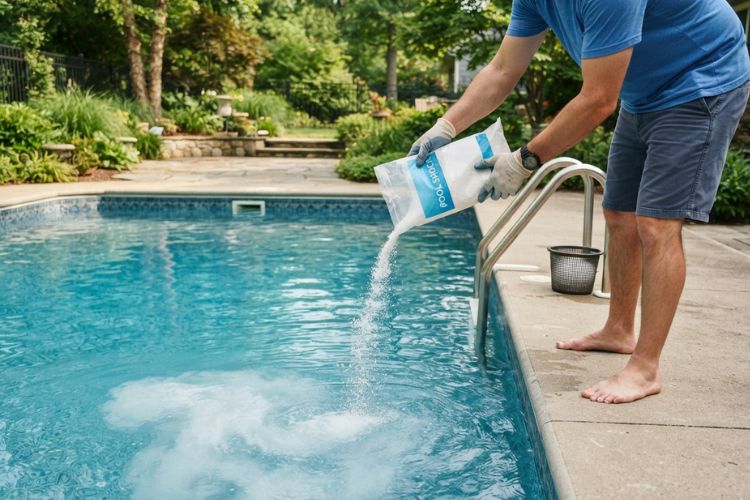
Shocking a pool means adding a concentrated dose of chlorine or another oxidizing product to break down contaminants that regular chlorine cannot remove on its own. It helps eliminate bacteria, destroy chloramines, and improve water clarity.
Regular chlorination keeps your pool sanitized during normal use, while pool shock treatment is used when the water needs extra cleaning. You may need it after a pool party, following heavy rainfall, or if the water starts looking cloudy.
Knowing how to shock a pool also helps protect your equipment and supports the effectiveness of your regular pool chemicals by keeping the water properly balanced.
Signs Your Pool Needs To Be Shocked
- Pool water usually gives clear signs when extra treatment is needed. Paying attention to these changes helps you deal with small problems before they become larger ones.
- Cloudy water is one of the most common warning signs. If the water loses its sparkle even though the filter is running, shocking the pool may help restore clarity.
- A strong chlorine smell is another sign that people often misunderstand. Instead of meaning there is too much chlorine, it usually indicates chloramines have built up, and a pool shock treatment is needed.
- You should also consider when to shock pool water after heavy rain, periods of very hot weather, or several days of frequent swimming. Organic contaminants build up more quickly under these conditions and can reduce water quality.
What You’ll Need Before You Start
Before opening the shock product, gather everything you need. Having your equipment ready makes the process safer and helps you avoid interruptions once you begin.
-
Pool Shock Product
Choose a shock product that matches your pool type and follow the manufacturer’s instructions for the correct dosage. Using more than recommended does not necessarily produce better results.
-
Protective Gloves And Eyewear
Pool shock is a concentrated chemical, so protecting your hands and eyes is always a good idea. Handle the product carefully and avoid direct contact.
-
Water Testing Kit
Test strips or a liquid testing kit help you measure chlorine and pH levels before you begin. Testing first makes it easier to determine how much product is required and confirms the water is safe after treatment.
-
Pool Brush And Skimmer
Remove leaves, insects, and other debris before shocking the pool. Cleaning the surface first allows the shock treatment to work more effectively because it can focus on contaminants in the water rather than visible debris.
-
Pool Pump And Filtration System
The pump should be running while you add the shock so it circulates evenly throughout the pool. Good water movement improves the effectiveness of the treatment and helps restore balanced water more quickly.
Step-by-Step Guide To Shocking Your Pool
Once everything is prepared, you can begin the treatment. Taking your time with each step helps you get better results while keeping the process safe.
1. Test The Pool Water
Check the chlorine and pH levels before adding any shock product. If the pH is too high or too low, the treatment may not work as effectively. Testing first also gives you a better idea of how much product your pool needs.
2. Choose The Correct Type And Amount Of Shock
Read the instructions on the product label and measure the recommended amount for your pool size. Different products contain different chlorine strengths, so avoid guessing. Knowing how to shock a pool properly starts with using the right dose.
3. Turn On The Pump
Keep the filtration system running before, during, and after adding the shock. Continuous circulation helps distribute the chemicals evenly and prevents concentrated areas from forming.
4. Dissolve The Shock If Required
Some products should be dissolved in a bucket of pool water before they are added, while others can be poured directly into the pool. Always follow the manufacturer’s instructions rather than assuming every product works the same way.
5. Add The Shock Evenly Around The Pool
Walk around the edge of the pool and add the product gradually instead of pouring everything into one spot. This allows the pool shock treatment to spread more evenly and reduces the chance of bleaching certain pool surfaces.
6. Let The Water Circulate
Leave the pump running for several hours or for the time recommended on the product label. This gives the treatment enough time to mix thoroughly and clean the water.
If you notice the pool level dropping while checking your equipment, inspect the pool separately instead of assuming it is related to the shock treatment. Water loss is usually caused by evaporation or a leak rather than the chemicals themselves.
Test The Water Before Swimming
Do not enter the pool immediately after treatment. Test the water again and wait until the chlorine level returns to the range recommended on the product label. This final step is an important part of learning how to shock a pool safely.
How Often Should You Shock A Pool?
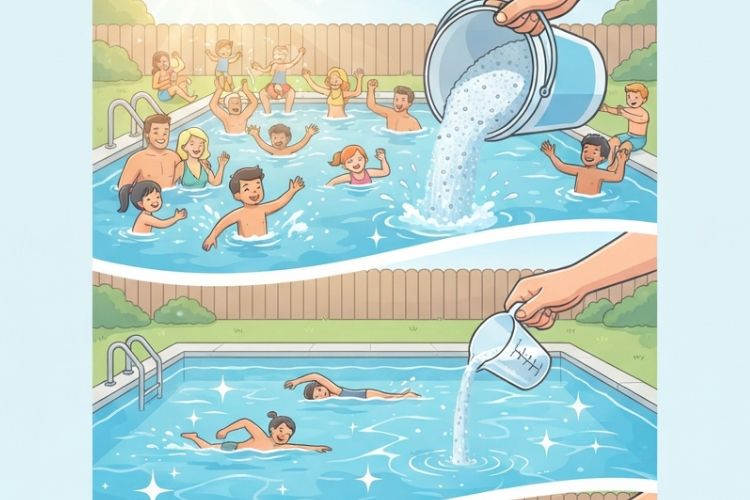
There is no single schedule that works for every pool. The right timing depends on how often the pool is used, the weather, and the condition of the water. For many residential pools, shocking once a week during the swimming season is a common routine, while pools with lighter use may need it less often.
Understanding when to shock pool water also means paying attention to changing conditions. Heavy rain, pool parties, algae growth, or cloudy water are all good reasons to shock the pool even if it has not been a full week. The best time to shock pool water is usually after sunset because sunlight reduces the effectiveness of chlorine.
If regular pool shock treatment no longer improves water clarity or the pool surface continues to show signs of wear, the problem may go beyond water chemistry. In that case, it may be worth considering pool resurfacing to restore the condition and appearance of an older pool.
Final Thoughts
Once you understand the process, learning how to shock a pool becomes part of normal pool care rather than a difficult task. Following the correct steps, using the right amount of product, and testing the water afterward will help keep your pool clean and comfortable throughout the swimming season.
If the water continues to stay cloudy or your pool shows signs of wear despite regular maintenance, it may be time to inspect the pool more closely. Addressing underlying issues early can help prevent larger maintenance problems and keep your pool in good condition for years to come.
FAQs
Can I shock my pool during the day?
It is possible, but it is not recommended. The best time to shock pool water is in the evening because sunlight reduces the effectiveness of chlorine.
How long should I wait before swimming after shocking a pool?
Always follow the instructions on the product label. In most cases, you should wait until chlorine levels return to the recommended range before swimming.
What happens if I add too much pool shock?
Adding too much shock can raise chlorine levels above the safe range. This may require extra time before swimming and additional testing to make sure the water is balanced again.
Do I need to shock my pool every week?
Not always. Weekly treatment works well for many pools, but usage, weather, and water quality all influence how often and how to shock a pool becomes part of your maintenance routine.