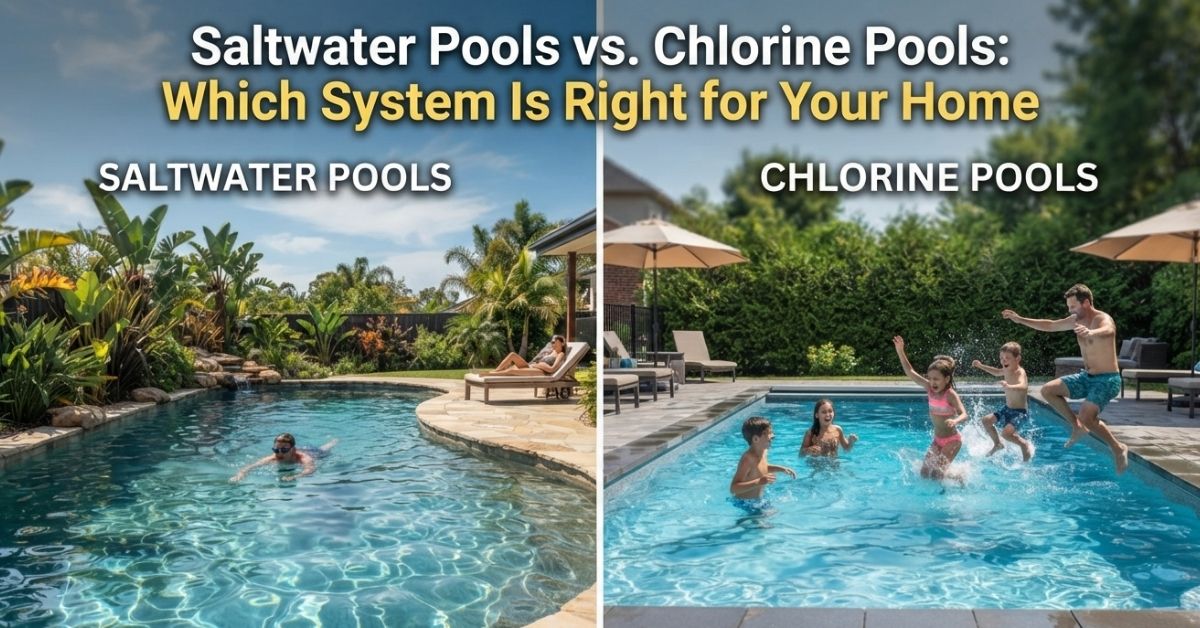
The sanitation system you choose for your pool affects more than water quality. It can change how often you add chemicals, how much maintenance you handle, what equipment you need, and what you spend over time.
Saltwater and traditional chlorine pools are both common choices. A saltwater pool produces chlorine through a salt chlorine generator, while a traditional chlorine pool requires chlorine to be added directly to the water. Both can keep a pool clean when properly maintained.
So, which one is right for your home? Looking at how each system works, what it costs, and what daily care involves can make the decision easier.
How Do Saltwater and Chlorine Pools Work?
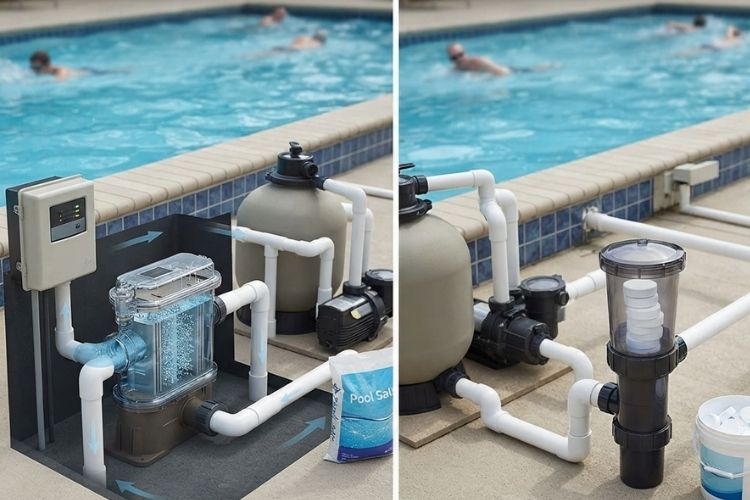
Both systems use chlorine to sanitize pool water. The important difference is how the chlorine gets into the water.
-
How Does a Saltwater Pool Work?
A saltwater pool uses a salt chlorine generator. Salt is added to the pool water, and the generator uses electrolysis to convert the salt into chlorine. The chlorine then sanitizes the water as the pool system operates.
This means you do not have to add chlorine tablets or liquid chlorine as frequently. However, a saltwater pool still needs regular attention. You need to test the water, balance pH and alkalinity, check the salt level, and clean the salt cell when needed.
-
How Does a Chlorine Pool Work?
A traditional chlorine pool gets its sanitizer from products such as tablets, liquid chlorine, or granules. These products are added directly to the water according to the pool’s needs.
Chlorine levels can change because of sunlight, rain, temperature, and heavy swimming. Regular testing helps you know when more chlorine is needed.
-
Does a Saltwater Pool Still Use Chlorine?
Yes. Saltwater pools are not chlorine-free. The difference is how the chlorine is produced. A traditional pool receives chlorine from a chemical product, while a saltwater system produces chlorine from salt through the generator. Both systems still rely on chlorine to sanitize the water.
Saltwater vs Chlorine Pools: What’s the Difference?
The biggest difference is the way chlorine is managed. A traditional chlorine pool requires you to check the chlorine level and add more when needed. A saltwater generator produces chlorine automatically while the system is running.
There is also a difference in equipment and installation cost. Saltwater systems usually cost more at the start because they require a generator and salt cell. Traditional chlorine systems are simpler and generally less expensive to install. Looking at the saltwater pool pros and cons can help you understand whether the added convenience is worth the higher initial cost.
Neither system is maintenance-free. Both need regular water testing, cleaning, filtration, circulation, and chemical balancing.
How Much Does a Saltwater Pool Cost?
A saltwater system usually has a higher initial cost because of the salt chlorine generator and its installation. The salt cell also has a limited service life and will eventually need replacement.
There are several types of salt water pool systems, and the equipment and setup can vary depending on the pool and its size. You will still need salt and other chemicals to keep the water balanced. Your actual costs will depend on the equipment installed, how often the pool is used, and how well it is maintained.
For this reason, it is better to consider the long-term cost rather than looking only at the installation price. A higher upfront cost may come with different ongoing expenses.
How Much Does a Chlorine Pool Cost?
A traditional chlorine system generally costs less to install because it does not require a salt chlorine generator.
The ongoing expense comes from chlorine and other chemicals. Regular chlorine pool maintenance also means testing the water, adding chlorine when needed, and making adjustments to keep the pool balanced.
For many pool owners, this is a reasonable tradeoff. The system is familiar, chlorine products are easy to find, and you can adjust the chlorine level directly when the water needs additional treatment.
Are Saltwater Pools Easier to Maintain?
Saltwater pools can reduce some of the routine work because the generator produces chlorine automatically. But the rest of the pool still needs regular care.
With a saltwater system, you need to check chlorine, pH, alkalinity, and salt levels. The salt cell should also be inspected and cleaned when buildup occurs. The pump, filter, and other equipment need routine maintenance as well.
With a traditional system, chlorine pool maintenance involves checking the chlorine level and adding more when needed. You may also need to shock the pool after heavy use or when dealing with certain water problems.
The main difference is not whether maintenance is required. It is how much of the sanitizer management you have to handle yourself.
Which Pool Has Better Water?
Some swimmers prefer the feel of saltwater because it can feel softer on the skin. The salt concentration is much lower than seawater, so it does not feel like swimming in the ocean.
Still, water quality depends heavily on proper maintenance. A well-maintained chlorine pool can be just as comfortable to swim in as a well-maintained saltwater pool.
A strong chlorine smell or irritated eyes can also be linked to poor water balance and chloramines. It is not simply a matter of whether the pool uses salt or chlorine.
Saltwater and Pool Equipment
Saltwater can affect certain metals and materials, so equipment compatibility matters. Repeated exposure to salt can increase the risk of corrosion, especially around components that are not designed for saltwater use.
That does not mean a saltwater pool will automatically damage your equipment. Choosing suitable components and keeping the water properly balanced can help protect the system.
It is also useful to consider the full setup when selecting pool features and equipment. Pumps, filters, heaters, finishes, and other components should work with the sanitation system you choose.
Saltwater Pool Pros and Cons
Pros of Saltwater Pools
- The salt chlorine generator produces chlorine automatically.
- You do not need to handle chlorine products as frequently.
- Some swimmers prefer the softer feel of saltwater.
- Chlorine production is handled automatically while the system is running.
Cons of Saltwater Pools
- Saltwater systems usually cost more to install.
- The salt cell needs to be cleaned and eventually replaced.
- Salt can increase corrosion concerns with unsuitable equipment or materials.
- Regular water testing and chemical adjustments are still necessary.
Chlorine Pool Pros and Cons
Pros of Chlorine Pools
- Traditional chlorine systems are generally less expensive to install.
- The equipment is simple and familiar to most pool owners.
- Chlorine products are widely available.
- You can add chlorine directly when the pool needs more sanitizer.
Cons of Chlorine Pools
- Chlorine levels need to be checked regularly.
- Chlorine products need to be added manually.
- Pool chemicals must be stored and handled properly.
- Regular maintenance can require more hands-on work..
Can You Change a Chlorine Pool to a Saltwater Pool?
Many traditional chlorine pools can be converted to saltwater. A salt chlorine generator is installed, but the existing equipment should be checked first.
The plumbing, electrical setup, pool equipment, and materials may need to be reviewed to make sure they are suitable. A professional can identify any changes that may be needed before the conversion.
If you are tired of adding chlorine manually, a conversion may be worth considering. Just remember to account for the generator, installation, and future salt cell replacement when comparing the costs.
Which System Is Better for Your Home?
A saltwater system may be a good fit if you want less manual chlorine handling and prefer automatic chlorine production. It costs more to install, but some homeowners may find the reduced chemical handling worthwhile.
A traditional chlorine system may suit you better if you want a lower initial cost or prefer to manage the chlorine level yourself. It uses simpler equipment and gives you direct control over chemical treatment.
Think about your normal routine before deciding. How often will the pool be used? Who will maintain it? Are you comfortable testing the water and handling chemicals? These questions can help you choose between the two.
What Should You Consider Before Choosing a Pool System?
Cost and maintenance are important, but pool size, equipment, materials, and frequency of use matter too.
If you are comparing salt water pool systems, discuss the options with your pool builder before construction begins. The sanitation system can affect the equipment selected for the pool, so planning it early can help avoid compatibility issues later.
You should also think about how much maintenance you want to handle yourself. A lower initial cost may come with more hands-on work, while a more automated system may require a larger investment upfront.
Building a New Pool? Choose Your System Early
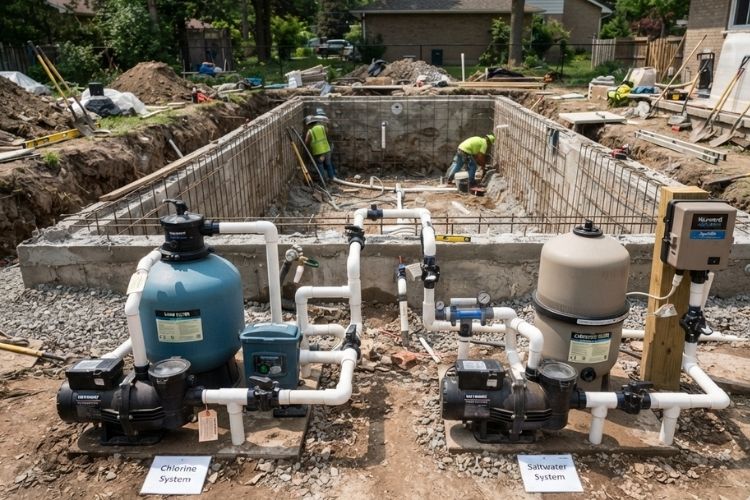
Choosing the sanitation system during the planning stage gives your builder time to select compatible equipment. This can include the pump, filter, heater, and other parts of the pool system.
Modern swimming pool technology gives homeowners more ways to manage water quality, but the basic goal remains the same. The system needs to work reliably and keep the water properly sanitized.
Making the decision before construction also gives you time to compare installation costs, maintenance, and future equipment expenses..
Final Thoughts
Saltwater and traditional chlorine pools can both provide clean, properly sanitized water. The main difference is how chlorine is supplied and how much of that process you handle yourself.
Saltwater offers automatic chlorine production and less manual chemical handling, while traditional chlorine systems usually cost less to install and use simpler equipment.
If you are planning a new pool, compare both options before construction begins. Think about the installation cost, maintenance, equipment, and how you plan to use the pool. Lifestyle Pools can help you look at the available options and plan a pool system that fits your home, preferences, and long-term maintenance needs.
FAQs
Is a saltwater pool really chlorine-free?
No. Saltwater pools still use chlorine. The salt chlorine generator produces that chlorine from salt.
Are saltwater pools cheaper than chlorine pools?
Saltwater systems usually cost more to install, while ongoing costs vary based on pool size, chemical use, maintenance, and equipment replacement.
Are saltwater pools easier to maintain?
They can reduce manual chlorine handling, but they still require regular testing, cleaning, and water balancing.
Does a saltwater pool still need chlorine?
Yes. Chlorine is still the sanitizer. The generator simply produces it from salt.
Can I convert my chlorine pool to saltwater?
Many chlorine pools can be converted. The existing equipment should be checked before a salt chlorine generator is installed