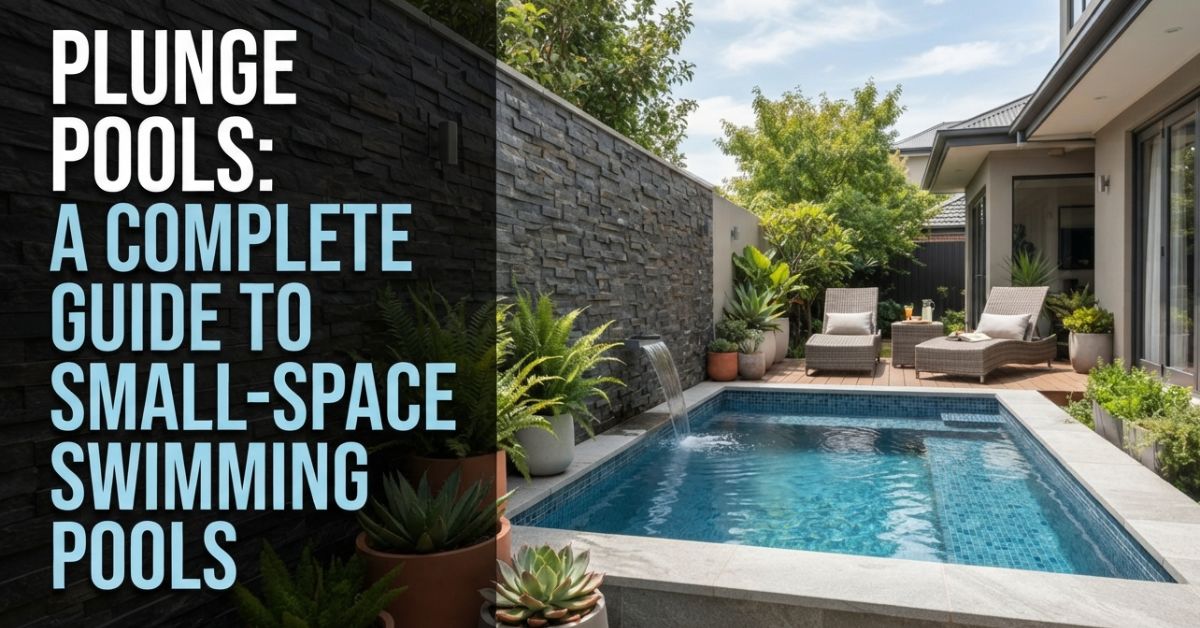
Unfortunately, not everyone has a spacious backyard to take advantage of swimming pools in sunny weather. Many of us have a backyard, a small lawn, and a burning desire to escape the sweltering heat of July without going too far from our homes. And this is when plunge pools come into play. They are small, quick to install, and much easier to use than ordinary swimming pools. A plunge pool is simply a small in-ground pool that is made for lounging, receiving a little sun, or even swimming a few strokes. The plunge pool guide below provides you with all information about plunge pools, their price, and whether you need one at your home.
What Exactly Is a Plunge Pool?
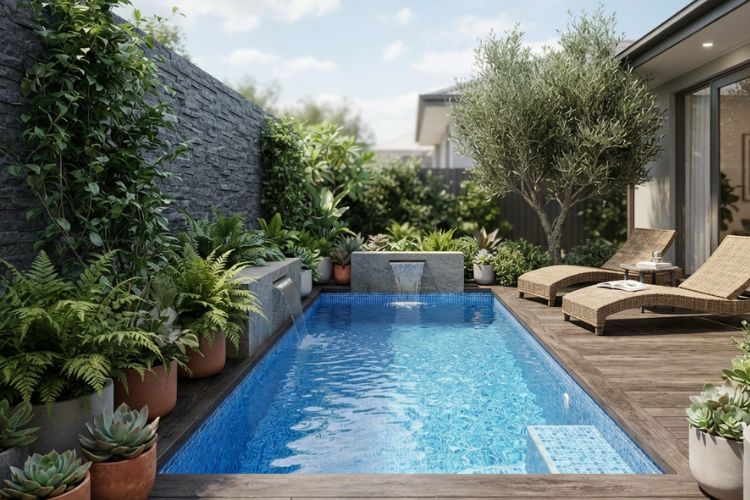
A plunge pool is a small and deep water pool created for lounging and relaxing instead of racing. Its average dimensions are 8-12 ft long and 4-7 ft wide, with a depth of about 4-6 feet.
The idea comes from old bathing rituals, where a quick cold dip followed a hot sauna. These days it works just as well beside a patio table as it does next to a steam room.
Who Gets the Most Out of One
Plunge pools are ideal for those wanting to have some water without any burden. Owners of city lots that are really tight. Couples who are downsizing. Families who prefer a splash area rather than a large chemical bill. They also come in handy in challenging parts of the yard that would not work for a traditional pool.
What You Can Actually Do in One
Small does not mean boring. Here is how people use theirs:
- Cool off: Beat the heat in seconds, no towel marathon required.
- Soak and unwind: Add a built-in bench and a few jets for a hot-tub feel.
- Light exercise: A swim jet creates a current to swim against, even in a short pool.
- Cold plunge: Chill the water for a bracing morning routine.
- Kid time: A shallow ledge makes a safe spot for little ones to splash, with an adult close by.
Why Small Wins on Upkeep
The smaller the size, the less water needed and the less work. The pump is smaller and more efficient, the chemicals will be used in lesser amounts, and the heating will take several hours instead of days. No longer will skimming and brushing turn into hours of labor but only tens of minutes. The excavation is smaller, so the yard does not get disturbed as much. For many owners, there is nothing like a stress-free operation of a plunge pool.
Why Fiberglass Makes Sense
Fiberglass plunge pools are constructed from the same material, allowing for quick installation. Not only does the gel coating of the pool make it impossible for algae to grow, but it also makes the pool easier to clean. With fiberglass pools, there is no need to replace liners or re-coat surfaces.
When buying fiberglass pool models, be sure to check the models and compare the different shapes, depths, and seating options available. When buying a fiberglass pool, keep in mind that if it is delivered in one piece by crane, the delivery pathway is just as important as the pool itself.
Planning Your Space
Grab a tape measure and walk your yard before you fall for any design. Check these things first:
- Where the sun lands during the hours you will use the pool
- Overhead trees and power lines, since leaves and cranes are a bad mix
- Underground utilities that could limit where crews can dig
- A clear access path wide enough for equipment and the shell
- How much room you want for seating and decking around the edge
A small in-ground pool can tuck against a fence, wrap around a deck, or sit in the middle of a courtyard. Think of the pool as part of the outdoor room, not a hole in the grass.
Permits and Local Rules
Even the smallest pools will require permits for construction and installation. Be aware that there will be some regulations to follow regarding how far back from the boundaries a pool must be built, precautions in case of fatalities, and safety measures to prevent electrocution. It is advisable to consult your local HOA if you live in a community.
Understanding the Price Tag
The primary element that comes to mind when thinking about costs is, “It depends.” The ultimate cost of purchasing and installing the plunge pool will vary depending on location, size, and type of installation. Fortunately, most people will be paying about $20,000 to $50,000, although some plunge pool projects can be accomplished with less.
What influences the price? Difficult excavation, hard soils, high water table level, and complicated crane access make the project more expensive. Equipment needed for the installation, like decking, fencing, lighting, heating system, and jets, will increase plunge pool costs as well. When you ask for a calculation, make sure to clarify whether the price includes excavation, installation of water pipeline, electrical wiring, and finishing works.
There are a couple of things you can do to ensure that your fiberglass pool pricing is not excessively high. Choose a prefabricated shell instead of a custom mold. Choose one or two upgrades you use regularly rather than add everything from the list. Get estimated prices from a few local installers.
Keeping It Clean Without the Fuss
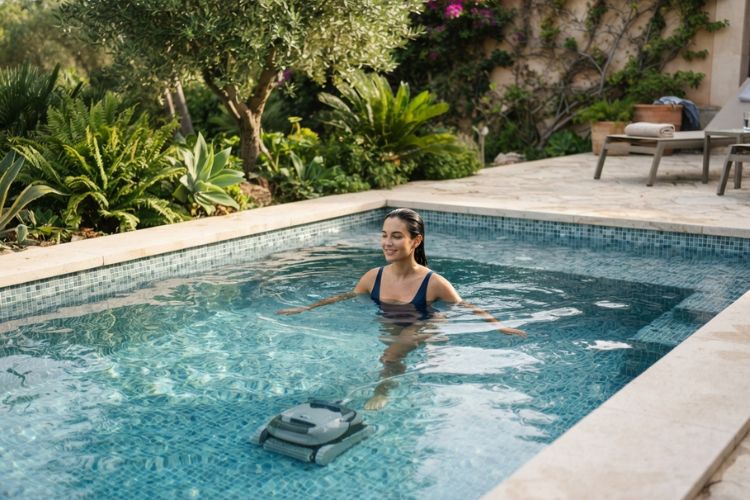
Maintenance is refreshingly simple. Skim leaves each day, brush the walls weekly, and test your water on a regular schedule. A cover keeps debris out and heat in when the pool is resting. Since the volume is small, a compact heater or heat pump can stretch your swimming season without wrecking your energy bill.
Final Thoughts
You do not need acres to enjoy water at home. A plunge pool offers the best parts of pool ownership, the cool-down, the quiet, the weekend moments, without the sprawl. If you have the right spot and a realistic plunge pool cost in mind, a fiberglass plunge pool is a smart way to turn a spare corner into your favorite place to be. Measure the yard, request your quotes, and picture the first dip.
Frequently Asked Questions
How big is a typical plunge pool?
Most are about 8 to 12 feet long and 4 to 7 feet wide, with depths between 4 and 6 feet. Sizes vary by manufacturer, so check the exact dimensions of any model you like.
Is a fiberglass plunge pool better than concrete?
It depends on your priorities. Fiberglass installs faster, resists algae, and needs less upkeep, while concrete offers unlimited custom shapes. For compact yards and quick installs, fiberglass is a popular pick.
Can I use a plunge pool all year?
Often, yes. With a heater or heat pump and a good cover, many owners stay comfortable well beyond summer. Some turn theirs into a cold plunge in winter instead.
Do I need a permit for a small in-ground pool?
In most places, yes. Local codes cover barriers, setbacks, and electrical work. Check with your city or county, and ask your installer who handles the application.